
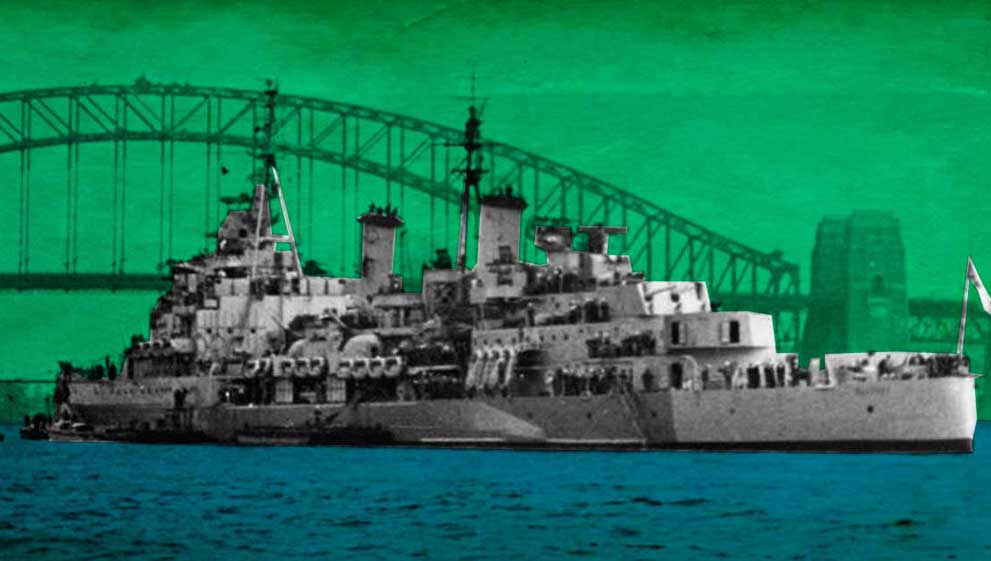
The Royal Navy cruiser HMS Belfast is one of the most complete surviving examples of a Second World War warship and provides a reliable historical reference point for discussing stainless steel in mid-twentieth-century marine engineering. Launched in 1938 and commissioned in 1939, she served in Arctic convoy escort, the Battle of North Cape and the Normandy landings. Preserved today in London by the Imperial War Museum, her navigation bridge offers an authentic view of wartime naval working conditions.
By the time Belfast entered service, stainless steel had been in industrial production for over twenty years. Developed in the 1910s, it was increasingly valued in British engineering for its resistance to corrosion, particularly in saltwater environments where rust rapidly degraded exposed metal. Warship hulls and armour still relied on conventional naval steel, but interwar engineering saw growing use of corrosion-resistant alloys in specialist marine components. The wider maritime sector, including merchant shipping and dock infrastructure, was already adopting stainless steel where durability outweighed initial cost.
A cruiser’s navigation bridge was an exposed technical workspace filled with precision instruments. Compass repeaters, signalling gear and optical devices had to function in spray, freezing air and constant vibration. Even minor corrosion could impair accuracy or jam moving parts. For that reason, naval engineering increasingly prioritised materials that reduced maintenance and improved reliability in exposed hardware. Ships like Belfast belong to a transitional generation in which the operational demands of global war accelerated acceptance of more durable alloys across marine practice.
Her preserved bridge illustrates the practical realities of WWII navigation: dense instrumentation, limited shelter and continuous exposure to the elements. The corrosion challenges faced by wartime crews were immediate, and the search for better materials formed part of a broader effort to improve endurance and safety at sea. Stainless steel would later become routine in maritime construction, but its rise was rooted in this period of gradual adoption and engineering pragmatism.
So, What's the real hero of WWII ship design? it's 10.5% chromium content and good decision-making. Just like our high quality bespoke stainless steel products, all of which are bespoke and built with years of technical experience. .
For more historical stainless steel stories on our website have a look at these past articles:
Harry Brearley and his Accidental Alloy
The Mysterious Indian Pillar That Inspired Stainless Steel
Image: HMS BELFAST at anchor in Sydney harbour, August 1945. Based on an image created and released by the Imperial War Museum - link