
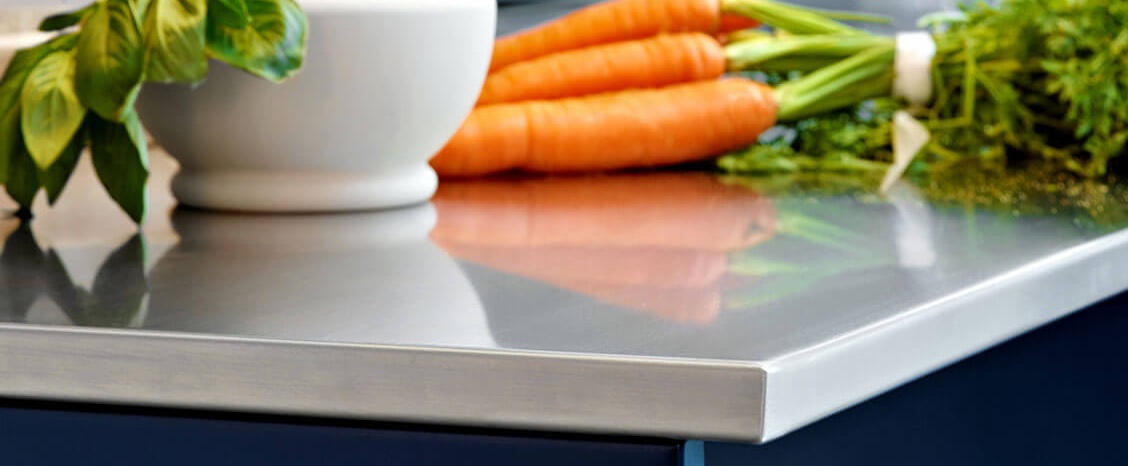
Stainless steel worktops are popular for a reason. They are hygienic, hard wearing and look smart in everything from domestic kitchens to professional food prep and laboratory environments. At the same time, they have a habit of showing fingerprints, smears and water marks more easily than other surfaces. The good news is that keeping a stainless steel worktop clean does not need specialist products or complicated routines. With the right approach, it becomes second nature.
Why stainless steel worktops need regular cleaning
Stainless steel is non porous, which means it does not absorb spills or bacteria. That makes it ideal for hygienic environments, but it also means that dirt, grease and residue sit directly on the surface. Left unattended, those marks build up and dull the finish.
Regular cleaning prevents staining, protects the surface layer and helps maintain the clean, professional appearance that stainless steel is known for. It also reduces the temptation to scrub too hard later, which is where most surface damage happens.
Understanding the grain of stainless steel
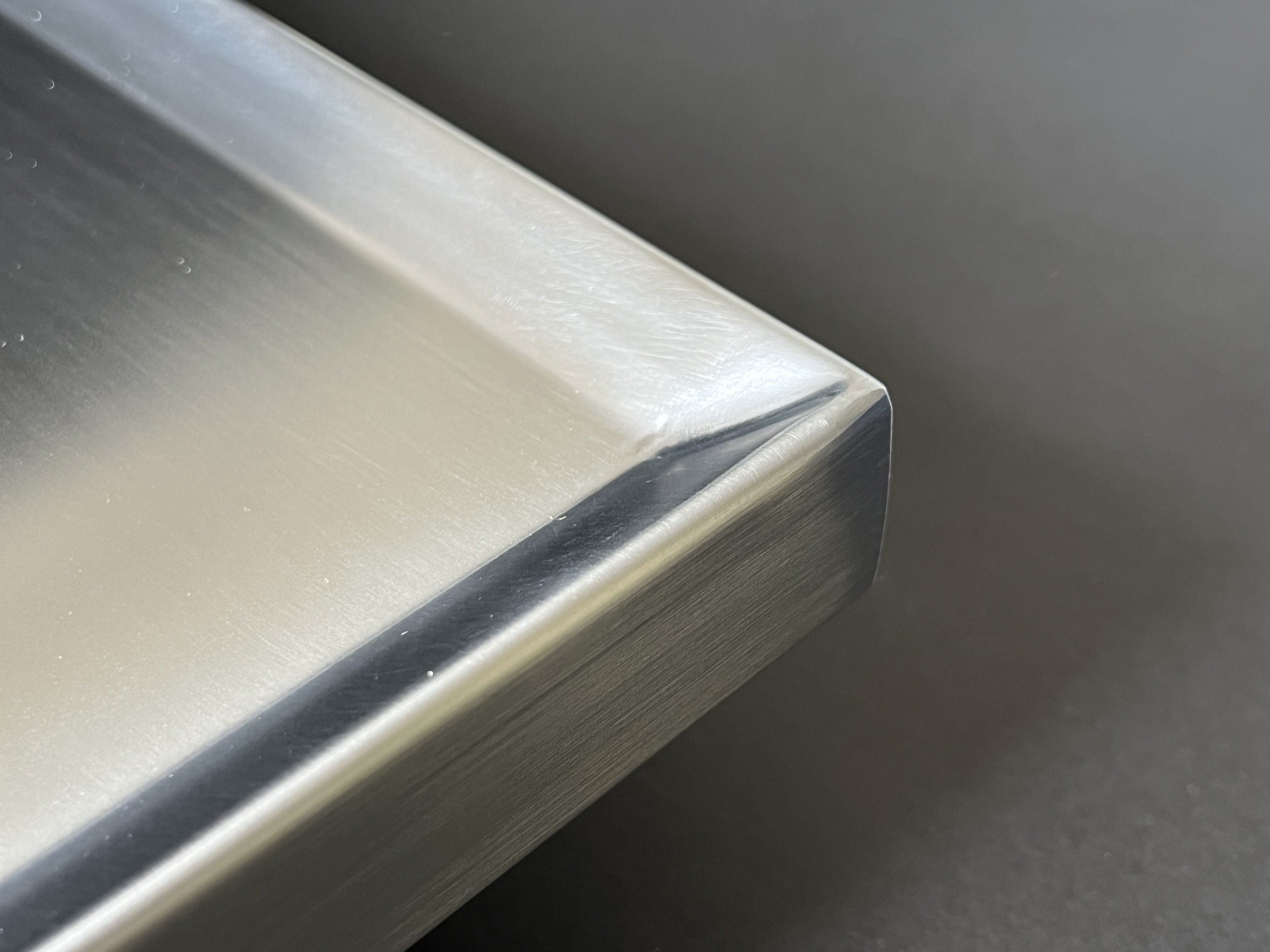
Before you start cleaning, it helps to understand one simple detail that is often overlooked. Most stainless steel worktops have a visible grain, similar to the grain in wood. Cleaning with the grain rather than against it makes a noticeable difference.
Wiping in the direction of the grain lifts dirt more effectively and reduces streaking. It also helps prevent fine scratches, which can make a worktop look worn long before it actually is.
What you will need to clean a stainless steel worktop
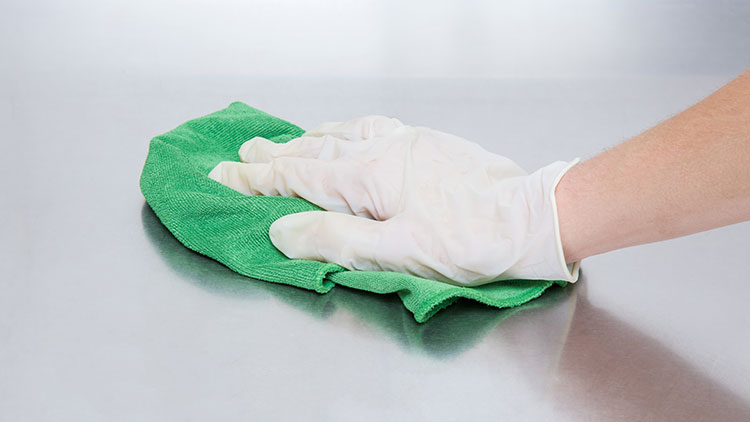
For everyday cleaning, you do not need much. A soft microfibre cloth, warm water and a mild washing up liquid will cover most situations. Avoid anything abrasive, even if it claims to be suitable for stainless steel.
For occasional deeper cleaning, white vinegar or a specialist stainless steel cleaner can be useful. A second dry cloth is helpful for buffing and removing moisture once cleaning is finished.
How to clean a stainless steel worktop for everyday use
Daily cleaning should be simple and quick. Start by removing crumbs, dust or loose debris with a dry cloth. Next, dampen a cloth with warm water and add a small amount of washing up liquid.
Wipe the surface gently, following the direction of the grain. There is no need to apply pressure. Let the cloth do the work. Once clean, rinse the cloth and wipe again to remove any soap residue.
Finish by drying the surface with a clean cloth. This step is often skipped, but it makes a big difference to reducing water marks and streaks.
How to remove stubborn marks and grease
From time to time, you will encounter marks that water and soap alone will not shift. Cooking oils, sticky residues or dried food splashes are common culprits.
For grease and heavier marks, mix equal parts white vinegar and warm water. Apply it with a soft cloth, again working with the grain. Vinegar helps break down grease without harming the surface.
For baked on food, let the solution sit for a minute or two before wiping. Avoid scraping with metal tools or scouring pads, even if the mark is tempting to attack directly.
Cleaning fingerprints and smears
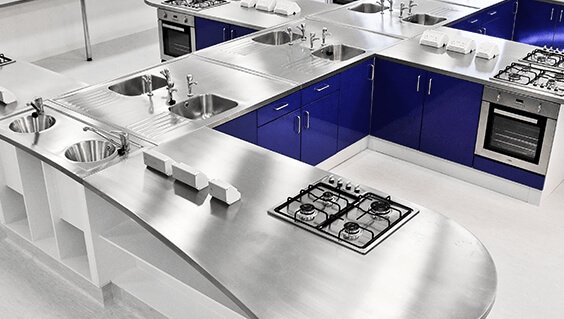
Fingerprints are one of the most common frustrations with stainless steel worktops, especially in kitchens and commercial environments. These marks are usually caused by natural oils on the skin.
A light spray of vinegar solution or a dedicated stainless steel cleaner will remove fingerprints effectively. Apply sparingly and buff with a dry cloth until the surface is clear. Overusing product often leads to more streaking rather than less.
What not to use on a stainless steel worktop
Knowing what to avoid is just as important as knowing what to use. Abrasive powders, wire wool, scouring pads and stiff brushes can scratch the surface. Once scratched, stainless steel becomes harder to keep clean and more likely to show marks.
Bleach and chlorine based cleaners should also be avoided unless specifically approved for stainless steel, as they can damage the protective layer over time. If these products are used nearby, always rinse the surface thoroughly afterwards.
How to disinfect a stainless steel worktop safely
In settings where hygiene is critical, such as food preparation or laboratories, disinfecting the worktop may be necessary. Mild disinfectants that are approved for stainless steel can be used, provided they are diluted correctly.
After disinfecting, rinse the surface with clean water and dry it. Leaving disinfectant residue behind can cause staining or dull patches if it dries on the surface.
How to restore shine to a stainless steel worktop
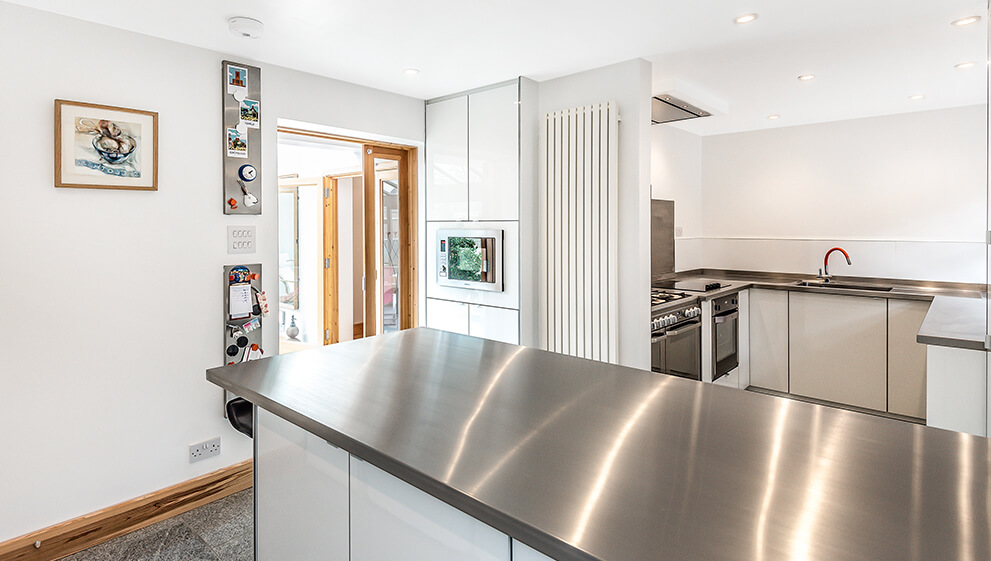
If a worktop starts to look flat or tired, restoring its shine is usually straightforward. After cleaning and drying, a very small amount of food grade mineral oil or stainless steel polish can be applied.
Use a soft cloth and work with the grain, then buff lightly until the surface looks even. Less is more here. Too much oil or polish attracts dust and fingerprints more quickly.
How often should you clean a stainless steel worktop
In domestic kitchens, a light clean after use and a more thorough clean once a day is usually enough. In commercial or industrial environments, cleaning schedules are often more frequent and should align with hygiene requirements.
The key is consistency. Regular gentle cleaning is far better for stainless steel than infrequent heavy scrubbing.
Common cleaning mistakes and how to avoid them
One of the most common mistakes is using the wrong tools, usually something abrasive in an attempt to save time. Another is leaving water or cleaning product to air dry, which leads to streaks and marks.
Cleaning against the grain is another small error that adds up over time. Once you are aware of it, it quickly becomes a habit to wipe in the right direction.
Long term care and maintenance for stainless steel worktops
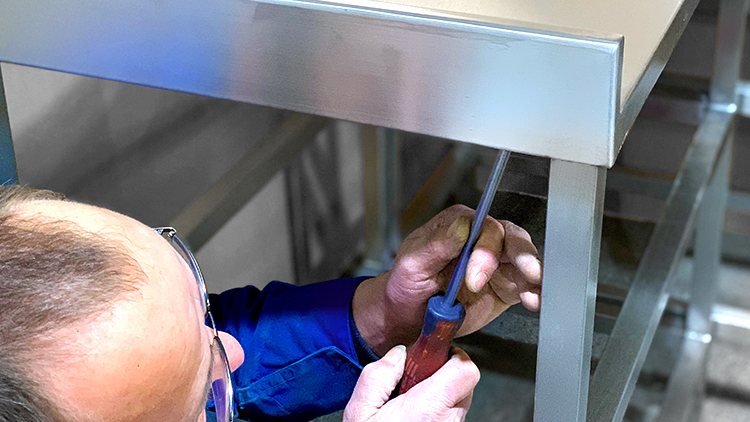
Stainless steel is tough, but it is not indestructible. Treating it with a bit of care keeps it looking good for years. Clean spills promptly, avoid harsh chemicals and use chopping boards rather than cutting directly on the surface.
With the right cleaning routine, a stainless steel worktop ages well. Minor marks tend to blend into the grain over time, giving the surface a professional, well used appearance rather than making it look worn out.