When choosing the best sink material, there’s no one-size-fits-all answer. Every laboratory environment demands different things chemical resistance, durability, heat tolerance, or ease of cleaning and the right sink material plays a critical role in achieving a safe and functional workspace. But when weighing up stainless steel vs resin sinks, and even polypropylene, a clear front-runner tends to emerge.
What’s the Best Lab Sink Material for Modern Laboratories?
Laboratories today are diverse from school science rooms to industrial testing labs to pharmaceutical cleanrooms. The “best” sink material depends on how and where it’s being used, but certain performance characteristics are universally important: resilience to wear, resistance to corrosion or staining, ease of cleaning, and long-term value.

Stainless Steel Sinks: The Gold Standard in Lab Environments
Stainless steel sinks are a mainstay in both industrial and commercial settings, and for good reason.

Exceptional Durability and Impact Resistance
Unlike many synthetic materials, stainless steel doesn’t chip or crack under sudden impact. This is particularly valuable in labs handling glassware, metal instruments, or heavy items. Even if dropped, stainless steel absorbs impact without sustaining damage that would compromise function.
Corrosion and Heat Resistance for Demanding Tasks
One of stainless steel’s biggest advantages is its resistance to corrosion even when exposed to water, solvents, and most common laboratory chemicals. High-grade stainless steel alloys (such as 304 and 316) offer reliable performance in environments where acidic or alkaline substances may occasionally come into contact with surfaces.
Add to that its ability to tolerate high temperatures without warping or degrading, and you’ve got a material well-suited for labs involving heat-based processes or equipment sterilisation.


Easy Maintenance and Hygienic Surface
Stainless steel’s smooth, non-porous surface makes it easy to clean and disinfect a crucial requirement for preventing contamination in sterile or sensitive lab environments. Unlike resin or plastic, it doesn’t stain or harbour bacteria, making it ideal for hygiene-critical applications.
Sustainability and Recyclability of Stainless Steel
From an environmental perspective, stainless steel is 100% recyclable and can be repurposed repeatedly without losing integrity. It’s a long-lasting investment that supports sustainable procurement practices, which is increasingly important for public sector and green-certified lab builds.

Epoxy Resin Sinks: Chemical Resistance with Compromises
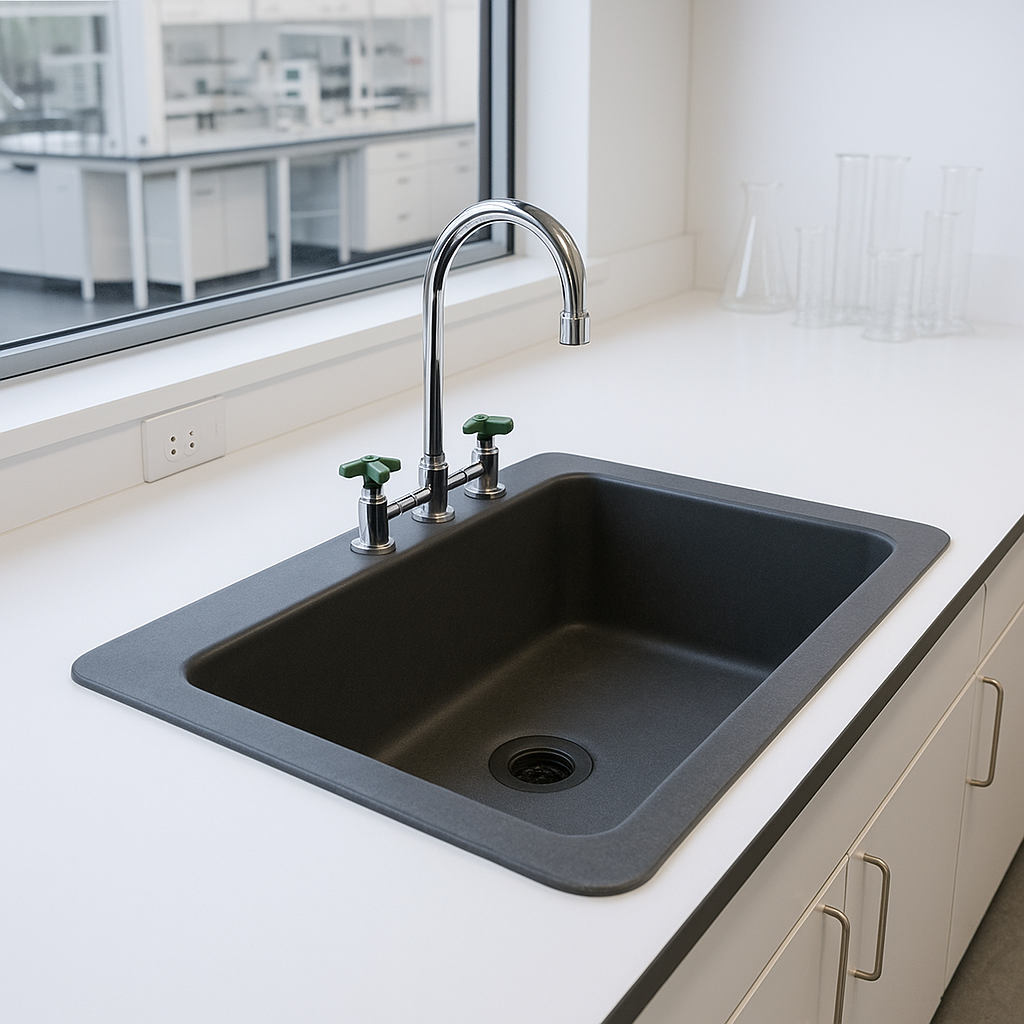
Epoxy resin sinks have historically been favoured for their strong resistance to chemicals, particularly in school or university labs. However, they come with limitations.
Limitations in Heat and Physical Stress
That said, epoxy resin is vulnerable to thermal shock. Sudden or extreme changes in temperature can cause the material to crack or degrade. Its resistance to impact is also lower; heavy equipment or repeated use can leave dents, chips, or even lead to structural failure over time.
Corrosion and Heat Resistance for Demanding Tasks
One of stainless steel’s biggest advantages is its resistance to corrosion even when exposed to water, solvents, and most common laboratory chemicals. High-grade stainless steel alloys (such as 304 and 316) offer reliable performance in environments where acidic or alkaline substances may occasionally come into contact with surfaces.
Add to that its ability to tolerate high temperatures without warping or degrading, and you’ve got a material well-suited for labs involving heat-based processes or equipment sterilisation.


Susceptibility to Cracking and Surface Wear Over Time
Though durable in some ways, epoxy resin can become brittle with age, especially if subjected to repeated chemical cleaning or rough handling. It’s also not uncommon to see hairline cracks or surface wear after several years of use, something far less likely with a stainless steel alternative.
Polypropylene Sinks: Lightweight but Niche
Polypropylene is often selected for very specific use cases where weight and cost take precedence over toughness or long-term durability.

Benefits for Lightweight and Budget-Conscious Installations
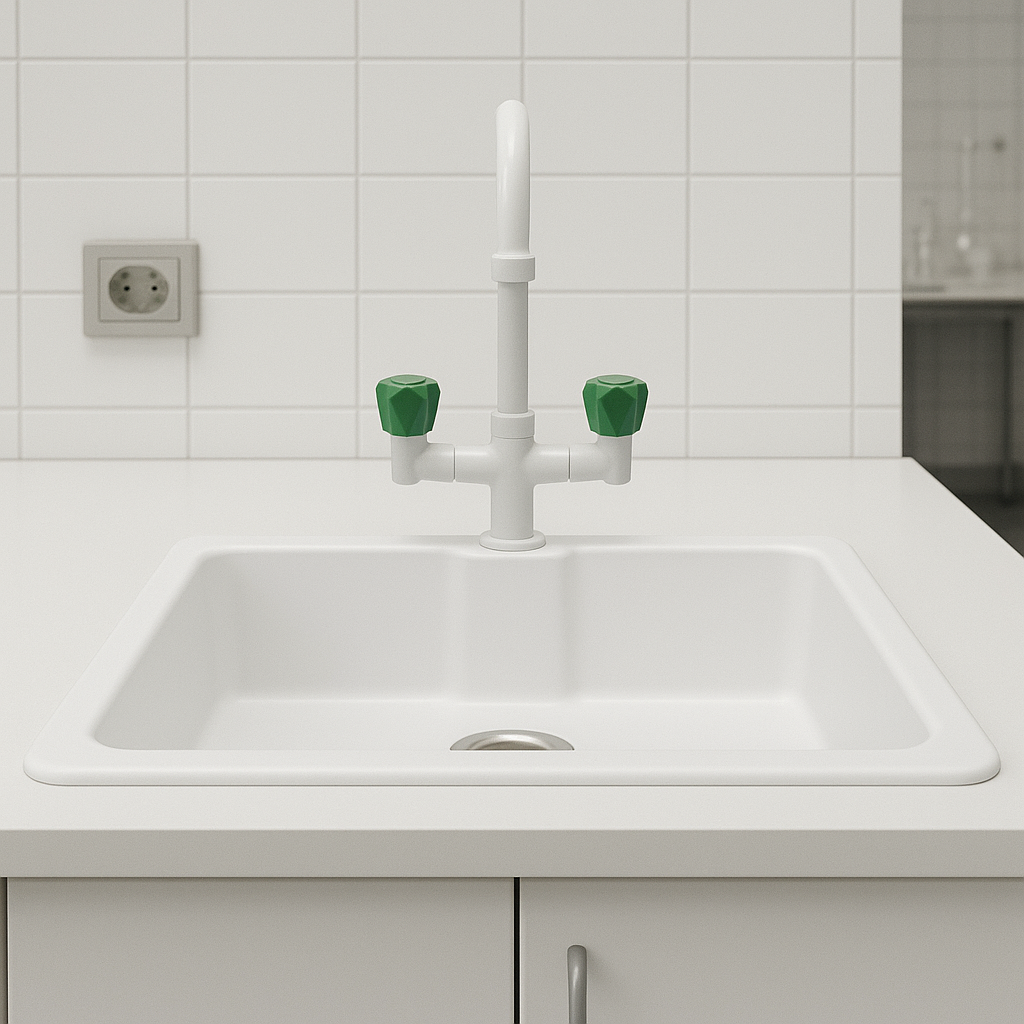
Polypropylene lab sinks are significantly lighter and cheaper than both stainless steel and resin options. In some educational or field lab setups, this makes them an attractive choic,e especially when mobility or quick installation is a factor.
Vulnerabilities: Low Heat Tolerance and Surface Staining
Unfortunately, polypropylene has a very low melting point and poor heat resistance. It is also more prone to staining, particularly from pigments, dyes, and certain chemical compounds. This can make maintenance more difficult and compromise the professional appearance of the lab over time.

Limited Lifespan in High-Use Settings
Polypropylene sinks are simply not designed for heavy-duty use. In high-throughput or high-impact environments, they will likely need replacing much sooner than their stainless or resin counterparts.
Stainless Steel vs Resin Sinks: A Direct Comparison
Lifespan and Long-Term Value
Stainless steel wins hands down on lifespan. A high-quality stainless steel lab sink can easily last decades with minimal maintenance. Resin, while resistant to chemicals, is more prone to damage over time, and polypropylene has the shortest useful life of the three.
Maintenance Demands and Cleaning Efficiency
When it comes to hygiene and ease of cleaning, stainless steel offers a smooth, wipe-clean surface that resists staining and microbial growth. Resin and polypropylene both tend to dull, stain, or degrade with exposure to harsh cleaners or solvents.
Versatility Across Lab Applications
From biosciences to material testing labs, stainless steel’s versatility is unmatched. It performs well across all disciplines and environmental conditions, whereas epoxy and polypropylene are far more specialised.
Environmental Impact and Disposal Considerations
Stainless steel not only lasts longer but is easier to recycle responsibly at the end of its lifespan. Resin and polypropylene, by contrast, often end up in landfill and are harder to repurpose.
When Might Resin or Polypropylene Be the Better Choice?
In fairness, there are niche applications where resin or polypropylene might be more appropriate. If your lab handles high volumes of corrosive acids daily and operates on a tighter budget, an epoxy resin sink could serve well in the short term. Similarly, polypropylene might be ideal for portable or temporary lab installations where weight and cost are key concerns.
But in the majority of cases, particularly where durability, hygiene, and long-term value are priorities, stainless steel remains the superior choice.
Final Thoughts: Why Stainless Steel Continues to Lead in Laboratory Sinks
While epoxy resin and polypropylene each have their uses, they simply don’t offer the same all-around performance, longevity, or aesthetic appeal that stainless steel does. Whether you’re designing a new laboratory or upgrading an existing facility, stainless steel provides the ideal balance of strength, hygiene, and sustainability.
It’s not just about standing up to the job it’s about doing so for years to come, with minimal fuss. For labs that demand reliability, resilience, and a polished professional finish, stainless steel is, without doubt, the best lab sink material.
For more information on cleaning stainless steel, see our Stainless Steel Product Care Brochure
If you're interested in a new lab sik or even a lab table/worktop with a built in sink, take a look at our labratory sink page for more information.
You can give us a call on 01159 255927 whenever you'd like to ask questions, get advice and even ask for a free, no-obligation quote!
Our Guides & Brochures

DSM Stainless Steel Product Care
Please take a moment to read our product care brochure to help you look after you new stainless steel units to ensure they look as good as the day they are installed.
Download DSM 25 Year Warranty
For more information on our 25 year warranty please download our brochure
Download
DSM Terms of Business
Our Terms of Business Agreement sets out the terms and conditions on which we agree to provide services for you
Download